

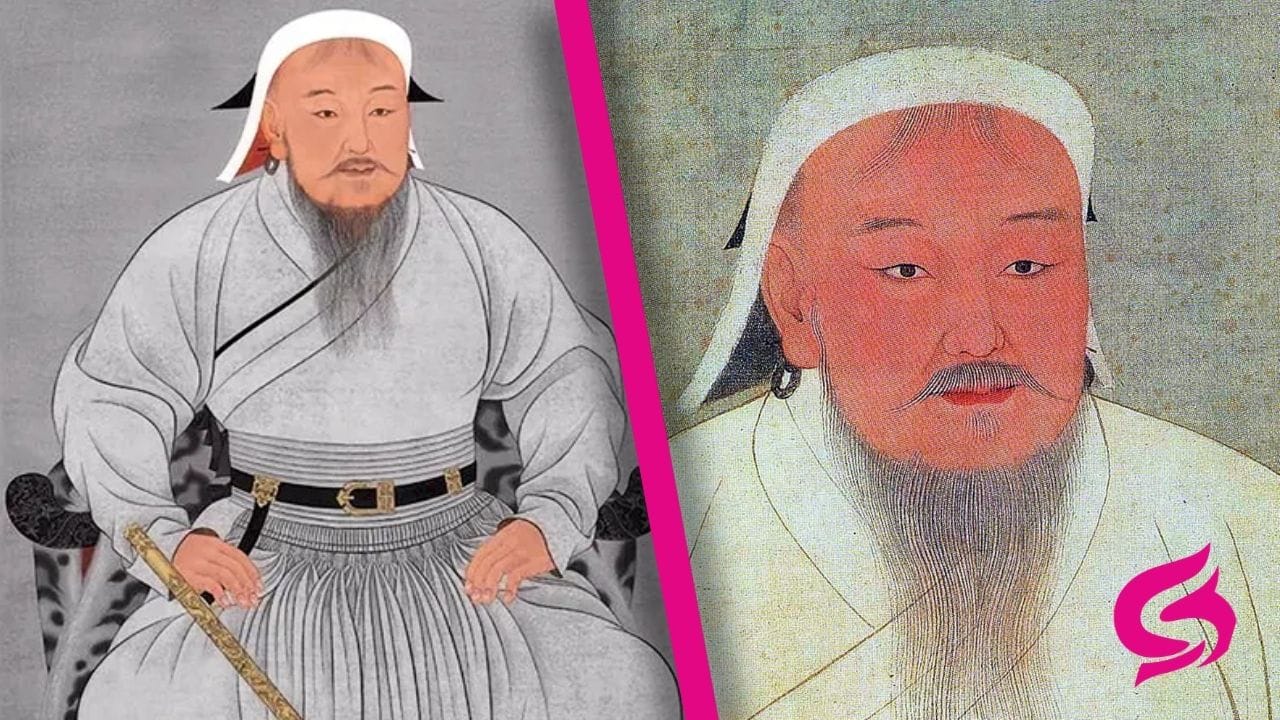

Genghis Khan net worth is often reported as an unbelievable $120 trillion. This estimate would make him richer than all modern billionaires combined. However, the figure does not come from verified financial records. It is mainly based on the size and assumed value of the Mongol Empire.
Genghis Khan, originally named Temüjin, controlled armies, livestock, taxes, trade routes, and conquered territories. His economic power was enormous, but political control over land was not the same as personal ownership. For this reason, historians cannot calculate his exact fortune in modern dollars.
Quick Bio of genghis khan net worth
| Quick Bio | Details |
|---|---|
| Full name | Genghis Khan |
| Birth name | Temüjin |
| Estimated birth year | Around 1162 |
| Birthplace | Near the Onon River, present-day Mongolia |
| Date of death | August 1227 |
| Age at death | Approximately 65 years |
| Father | Yesügei |
| Mother | Hö’elün |
| Senior wife | Börte |
| Children | At least nine with Börte, plus other children |
| Profession | Ruler, military commander, and founder of the Mongol Empire |
| Reign | 1206 to 1227 |
| Estimated net worth | Unknown, with an unverified claim of $120 trillion |
What Was Genghis Khan Net Worth?
The real Genghis Khan net worth is unknown because no complete financial records from his lifetime survive. There are no reliable documents showing how much gold, land, livestock, or personal property he owned. Any exact figure found online should therefore be treated as an estimate rather than a confirmed historical fact.
Unlike a modern billionaire, he did not hold company shares, bank accounts, or investments that could be easily valued. His wealth came from his authority over people, armies, animals, taxes, tribute, and trade. These resources belonged to a wider imperial system rather than to him alone.
The Truth Behind the $120 Trillion Claim
The Genghis Khan $120 trillion claim usually comes from calculating the modern value of the territory controlled by the Mongol Empire. At its greatest extent, the empire covered around 11 to 12 million square miles. Some writers treat this entire area as his personal property.
This approach is misleading because the empire reached its maximum size after his death. His sons and grandsons continued expanding Mongol territory for decades. Including their conquests in Genghis Khan net worth gives him credit for land that he never personally ruled.
The calculation also assumes that he owned every farm, city, animal, and natural resource within the empire. In reality, he ruled territories, collected tribute, and distributed resources among family members, commanders, soldiers, and officials.
Early Life and Birthplace
Genghis Khan was born as Temüjin, probably around 1162. His birthplace is traditionally identified as Delüün Boldog, near the Onon River in present-day Mongolia. Historians disagree about his exact birth year, with estimates ranging from 1155 to 1167.
His father, Yesügei, was a Mongol chieftain, while his mother, Hö’elün, became the main protector of the family. After Yesügei was reportedly poisoned, Temüjin’s family lost its political support and was abandoned by much of its tribe.
The family survived by hunting, fishing, and gathering food. These difficult years are important when discussing Genghis Khan net worth because he was not born into the type of luxury commonly associated with powerful rulers.
Parents and Siblings
His father, Yesügei, belonged to the Borjigin clan and held influence among the Mongol tribes. His mother, Hö’elün, was known for her strength and determination. She raised her children under extremely difficult conditions after her husband’s death.
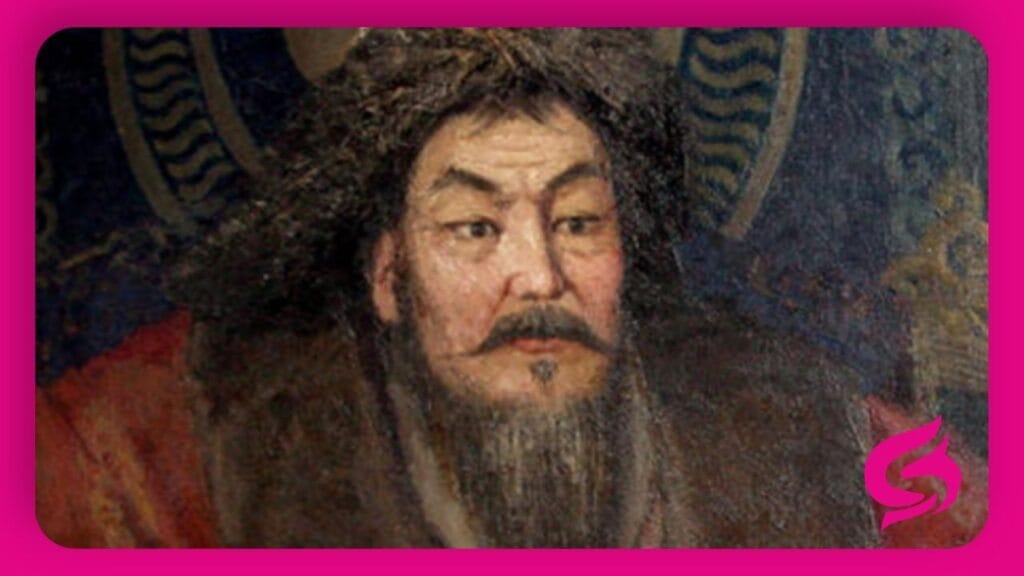
Temüjin’s siblings included Qasar, Hachiun, Temüge, and Temülün. He also had half-brothers named Behter and Belgutei. Some of these family members later played important roles in his political and military rise.
Wife and Children
The most important woman in his life was Börte, his senior wife. They were betrothed when they were young and later married. Börte was kidnapped by Merkit raiders shortly after their marriage, but Temüjin organized a military campaign and rescued her.
He also had several junior wives and consorts, although historians do not know their exact number. Claims that he had hundreds of wives are not supported by dependable historical evidence.
With Börte, he had four famous sons, Jochi, Chagatai, Ögedei, and Tolui. He also had several daughters. After his death, territories and revenue rights were divided among members of his family, showing why Genghis Khan net worth was not a single private estate.
Education and Military Career
Genghis Khan did not receive formal education in a school. His training came from steppe life, where he learned horse riding, archery, hunting, livestock management, survival, negotiation, and warfare.
It is uncertain whether he could read or write. However, he understood the importance of written administration. His government used a writing system based on the Uyghur script and employed educated scribes, translators, engineers, and advisers.
In 1206, Mongol leaders officially recognized Temüjin as Genghis Khan. He then launched campaigns against the Western Xia, the Jin dynasty, and the Khwarazmian Empire. His military organization, discipline, and ability to promote talented commanders helped him build a vast empire.
Main Sources of Genghis Khan Net Worth
Livestock was one of the most important sources behind Genghis Khan net worth. Horses supported military campaigns and long-distance travel, while sheep, cattle, and camels provided food, clothing, transportation, and trade value.
War booty also played a major role. Successful campaigns brought animals, weapons, textiles, precious metals, food, and other valuable goods under Mongol control. Skilled workers, engineers, and craftsmen were also moved into Mongol service.
Tribute and taxation became more important as the empire expanded. Conquered territories could be required to provide money, grain, livestock, soldiers, or manufactured goods. Trade routes also produced customs revenue and helped merchants travel across Eurasia.
These resources made the Mongol leadership extremely powerful. However, they were shared across the ruling family, military commanders, officials, and imperial institutions rather than forming Genghis Khan net worth alone.
Lifestyle and Physical Appearance
Despite his power, Genghis Khan continued living within a largely nomadic culture. He governed from mobile camps containing gers, animals, carts, soldiers, officials, and members of the royal household.
His lifestyle was not poor, but it differed from that of rulers who lived in permanent palaces. He had access to large herds, valuable goods, weapons, servants, and supplies from across the empire.
His exact height is unknown. No dependable contemporary source gives a physical measurement. Later descriptions often portray him as strong and broad, but claims about his eye colour, hair colour, or exact appearance remain uncertain.
Death and Burial Mystery
Genghis Khan died in August 1227 during a military campaign against Western Xia. Based on the commonly accepted birth year of 1162, he was approximately 65 years old.
The exact cause of his death remains disputed. Different accounts mention illness, injuries, or a fall from a horse. None of these explanations has been conclusively proven.
His burial location has never been confirmed. The absence of a discovered tomb, grave goods, or personal financial records makes it even more difficult to calculate Genghis Khan net worth accurately.
Social Media Presence and Modern Popularity
Genghis Khan had no social media presence because he lived centuries before the internet. Accounts using his name on Facebook, Instagram, TikTok, YouTube, or X are managed by museums, publishers, tourism groups, or history creators.
Modern online platforms have helped spread the Genghis Khan $120 trillion claim. The large number attracts attention, even though it does not reflect the way wealth, land, and political power worked during the 13th century.
Frequently Asked Questions
What was Genghis Khan’s net worth?
Genghis Khan’s exact net worth is unknown because no reliable financial records from his lifetime exist. The often-repeated estimate of $120 trillion is based on the value of territory controlled by the Mongol Empire, not on his verified personal assets.
Was Genghis Khan really worth $120 trillion?
There is no historical proof that he personally owned $120 trillion. The estimate treats imperial land, taxes, tribute, and resources as private wealth, even though these were shared among his family, commanders, soldiers, and officials.
How did Genghis Khan make his money?
His economic power came from livestock, taxation, tribute, trade revenue, conquered goods, and control over important territories. These resources supported the wider Mongol administration and military system rather than belonging entirely to him.
Who was Genghis Khan’s wife?
His senior and most important wife was Börte. She was the mother of his four best-known sons, Jochi, Chagatai, Ögedei, and Tolui, as well as several daughters.
How old was Genghis Khan when he died?
He was approximately 65 years old when he died in August 1227, based on the commonly accepted birth year of 1162. However, historians are not completely certain about his exact date of birth.
Conclusion
Genghis Khan net worth cannot be calculated accurately in modern dollars. The famous $120 trillion figure is based mainly on the estimated value of imperial territory, including land conquered after his death. It also treats political control as personal ownership and ignores how Mongol resources were divided among relatives, commanders, soldiers, and officials.
He was undoubtedly one of the most powerful rulers in history. He controlled tribute, taxes, livestock, trade routes, military forces, and conquered wealth across a huge part of Eurasia. However, the Genghis Khan $120 trillion claim should be viewed as a modern exaggeration rather than a verified financial fact.
The best conclusion is that Genghis Khan net worth remains unknown. His true wealth was not a personal bank balance, but the extraordinary economic, military, and political power he held as the founder of the Mongol Empire.
You May Like:Jayson Tatum Net Worth: How the Celtics Star Makes His Money
